

This report is based on court documents and the official statement notice. For more information, Mercer Island students should consult the settlement administrator at (833) 447-8852. All screenshots are by Jayce Madamba.
Millions of students nationwide—including those at Mercer Island High School—who received an email titled “Legal Notice of Class Action Settlement” may soon be eligible for cash payments. This follows a $17.25 million settlement involving Naviance, a college-readiness platform used widely across the district. While the settlement is currently awaiting final court approval, it marks one of the largest student-privacy resolutions in U.S. history.
The lawsuit, Q.J v. PowerSchool Holdings LLC, alleges that PowerSchool and its partners engaged in “digital wiretapping” by allowing third-party companies, including tech giants such as Microsoft and Google, to intercept and record sensitive student communications without consent.
While PowerSchool denies any legal wrongdoing, the settlement marks one of the largest student-privacy resolutions in U.S. history.

The legal battle began in 2023 when a student, identified only as Q.J., filed a complaint in the Northern District of Illinois. The lawsuit accused PowerSchool and the analytics firm Heap Inc. of embedding tracking code into the Naviance platform.
The lawsuit accused PowerSchool and the analytics firm Heap Inc. of embedding tracking code into the Naviance platform to surreptitiously capture and record student activity. According to the complaint, this code allowed third parties to monitor:
- Real-time recordings of what students typed, effectively capturing every keystroke as it happened.
- Personal data from career and college interest assessments, including student aspirations and survey results.
- Private interactions between students and guidance counselors, meaning sensitive digital conversations, were intercepted rather than remaining confidential.
While the defendants deny violating any laws, they have agreed to the settlement to avoid the continued expense and uncertainty of a legal battle.
The lawsuit claims that while students were using Naviance to talk to guidance counselors or fill out surveys about their mental health or career interests, the data was being intercepted by third parties. This would add a level of “creepiness factor” that would engage student readers more than just mentioning “data” in general.
Additionally, it argued these actions violated several federal and state laws, including the Electronic Communications Privacy Act (ECPA) and the Illinois Eavesdropping Act, both of which are the legal statutes for wiretapping.
The settlement defines a “Class Member” as any person in the United States who logged into Naviance as a student at least once between Aug. 18, 2021, and Jan. 23, 2026. Locally, this includes not just the current seniors (class of 2026), but also several years of alumni who used the platform recently.
Which begs the question for many: “What do the students get from this?
For these students, the primary outcome is the opportunity to claim a pro rata share of the $17.25 million settlement fund. In addition to potential monetary payments, students will see long-term policy changes, such as the mandatory deletion of their intercepted data from third-party servers.
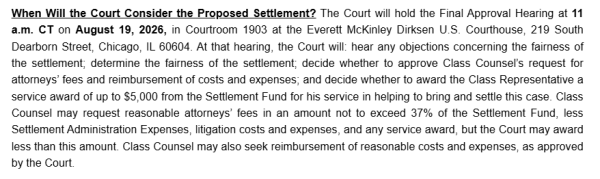
Furthermore, the deadlines are:
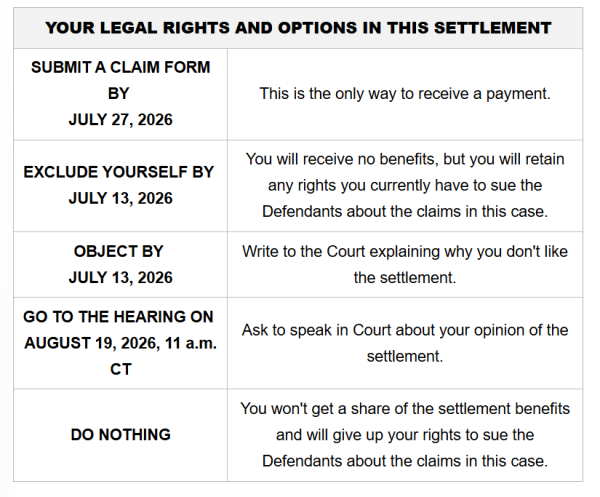
But beyond the money, policy changes. For student journalists and privacy advocates, the settlement’s non-monetary requirements are just as significant. Under the agreement:
- Data Deletion: PowerSchool must instruct third parties, including Microsoft, Google and Heap, to delete all intercepted student data within 10 days of the final judgment.
- Two-Year Ban: PowerSchool is prohibited from using third-party advertising or analytics code on Naviance for the next two years unless approved by a new “Web Governance Committee.”
- Transparency: A banner must be displayed on the Naviance login page for nine months detailing the company’s commitment to privacy.
In statements regarding the settlement, PowerSchool maintained that it “strictly and proactively follows all legal, regulatory and voluntary requirements for protecting student privacy.” The company stated it settled the case to avoid the “uncertainties and expenses” of a long-term legal battle.

To any high school students who view this as a potential $50 payout and think “Social media has our data, this is nothing,” the implications of this settlement go much farther in depth than a Venmo deposit. The case serves as a landmark moment for student digital rights and data autonomy.
Your privacy is not a product and is currently being monitored by third parties. This is one of the largest student-privacy resolutions in history, meaning that this settlement forces major corporations to rethink how they handle minor-aged users’ data.
The “Web Governance Committee” and the two-year ban on third-party analytics mean that PowerSchool is now under a microscope, ensuring that the platform remains a tool for education rather than a hub for data collection.
And by requiring the deletion of intercepted data from giants like Microsoft and Google, the settlement aims to “scrub” your digital footprint from those years of use.
Understanding this settlement isn’t just about the money—it’s about recognizing that as a student, you have a legal right to a private digital space when planning your future.
Students, parents or minors who received a notice via school email should look for a unique Student Class Member ID (which appeared at the very top before introducing the settlement). This ID is required to file a claim at the official settlement website: www.powerschoolnaviancesettlement.com.
Payments will be distributed via check or electronically through PayPal, Venmo or Zelle approximately 45 days after the court grants final approval and all appeals are resolved.