
A recent student-led mental health survey at MIHS found that many students prioritize academics over their well-being and often avoid existing school mental health resources.
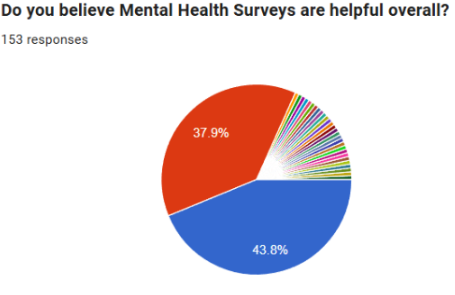
The survey, conducted from March 14 to March 24 by Sophomore Alice Liang, collected more than 150 student responses and examined student attitudes toward mental health surveys, school support resources and academic pressure. One of the most notable findings showed that approximately 63% of respondents reported prioritizing academics over their mental health.
Liang said the results regarding academics and student well-being stood out the most.
“The ‘other’ response choices painted an extremely bleak picture of how students view their future in relation to their work habits,” Liang said. “Many students believe that if they prioritize mental health, they will be taking a chunk out of the metaphorical ‘academic pie’ and will lead to less success in the future.”
The survey also found that nearly 60% of respondents had never used school mental health resources such as counselors, the Resource and Referral Center (R&R), or the Say Something reporting system.
Chris Harnish, a counselor with Mercer Island Youth and Family Services who works on campus, said he interpreted those results differently.
“I was stoked about that, actually,” Harnish said. “The way I interpreted that was that they either didn’t need our services, which is cool, or maybe they had alternative support outside of school.”
While Harnish viewed the finding positively, he agreed with the survey’s broader conclusion that academic pressure remains a significant challenge for many students.
“One of the constant themes when it comes to mental health is anxiety, stress, depression that’s often related to the academic rigor here,” Harnish said. “Sometimes I refer to [MIHS] as the University of Mercer Island.”
According to Harnish, the competitive environment found at many high-performing schools can contribute to increased stress as students balance coursework, athletics and extracurricular activities while preparing for college admissions.
The survey also found that about one-third of students admitted they were not completely honest on school mental health surveys. Liang said many students cited social pressure, fear of judgment, and concerns about being contacted by counselors as reasons for giving inaccurate responses.
To address those concerns, Harnish said the school has worked to increase transparency about how mental health data is used and continues to focus on reducing stigma surrounding counseling services.
“We continue to chip away at the stigma,” Harnish said. “Trying to normalize mental health services along that continuum of healthcare.”
Both Liang and Harnish emphasized the importance of making mental health support more accessible and encouraging students to seek help when needed. While they differed on the interpretation of some findings, both agreed that supporting student well-being remains an important part of the MIHS community.