


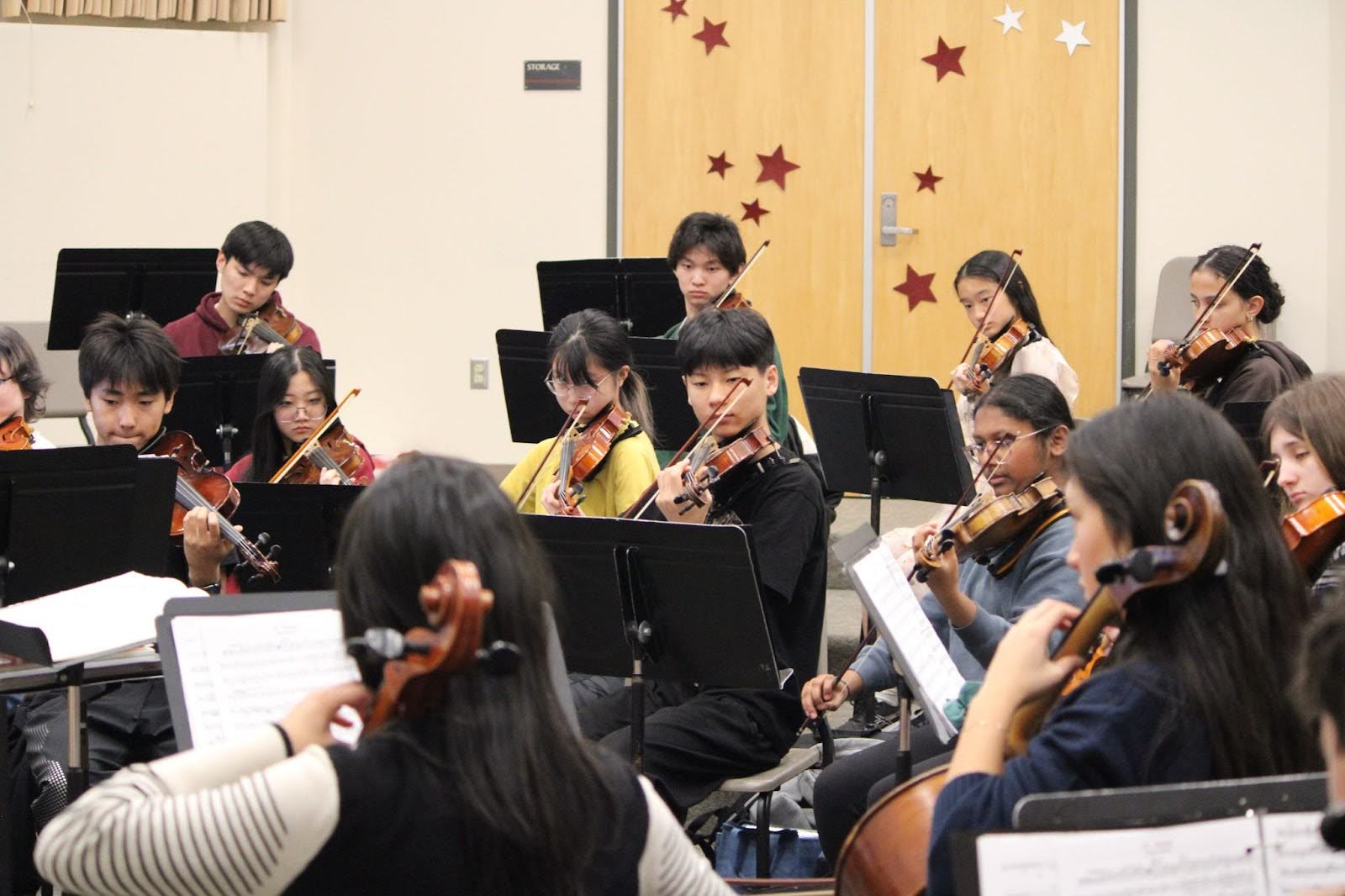
This fall, the Mercer Island School District has significantly changed the funding and revenue sourcing for the before-school fifth-grade music programs. Due to the district’s decision to cut $185,000 from its budget, students in the programs must now pay a $300 fee to participate.
When asked about the change, Weston Lucas, Assistant Director of Teaching and Learning for the district, gave the following explanation: “Instead of cutting [the program] – there are a couple of districts in our area that have unfortunately had to do that- the district decided that we would see if that was something that our community would partner with us on and to have a fee.”
However, teachers fear that the fee could have a negative impact on the rest of the program, given that elementary school music programs feed directly into those at IMS and MIHS. Mr. Kolk, the orchestra teacher for fifth grade and at MIHS, said, “It is no longer just something that you sign up for because you’re interested in. Now you’ve got to think about the economic realities, and our goal is to avoid that.”
Joining a Mercer Island music program is already a big commitment in terms of money. Students at all levels have to rent (or buy) their own instruments, which over one year can cost anywhere between $300-$600, or even more. Adding a fee could significantly decrease the number of people willing to join and invest in those programs.
“If you want a robust arts program, if this is something that the district stands for, that begins in the fifth grade… So adding this cost would cause our program to be less equitable. It really [would] be a space just for families that had a lot of extra money. And it would turn away people who otherwise would have been interested – that additional cost,” Mr. Kolk said.
The entire eight-year music program in the district builds on itself, beginning in the fifth grade and developing throughout middle and high school. If fewer people participated in those early courses, it would cause our class sizes to decrease, and people who decided to join later (without the fees) could be behind. Since the COVID pandemic, which had devastating impacts on our music programs, the program’s numbers have been growing steadily. A reduction in participation would be detrimental to the music programs, which have only recently recovered. What complicates this situation further is that because the classes fall outside of the instructional day, before school, it is more difficult to allocate money towards them.
Weston Lucas explained, “Over the last several years, we have had challenging financial situations as a district where less money is coming from the state. At the same time, our bills are going up. It’s more expensive for utilities. It’s more expensive for transportation. And so, in looking at where we needed to reallocate money, the district made the determination that we needed to look at the fifth grade. So previously the district covered all the costs and they were just no longer able to do that.”
Although the fees were created with the intention of temporarily replacing the funding while the district recovered from financial challenges, it raises the question of whether the fees will remain in place once there is sufficient funding to support the programs. According to a district source, it is unclear how long they will remain, although under this current funding plan, they are necessary to supplement the cut funds for these classes.