


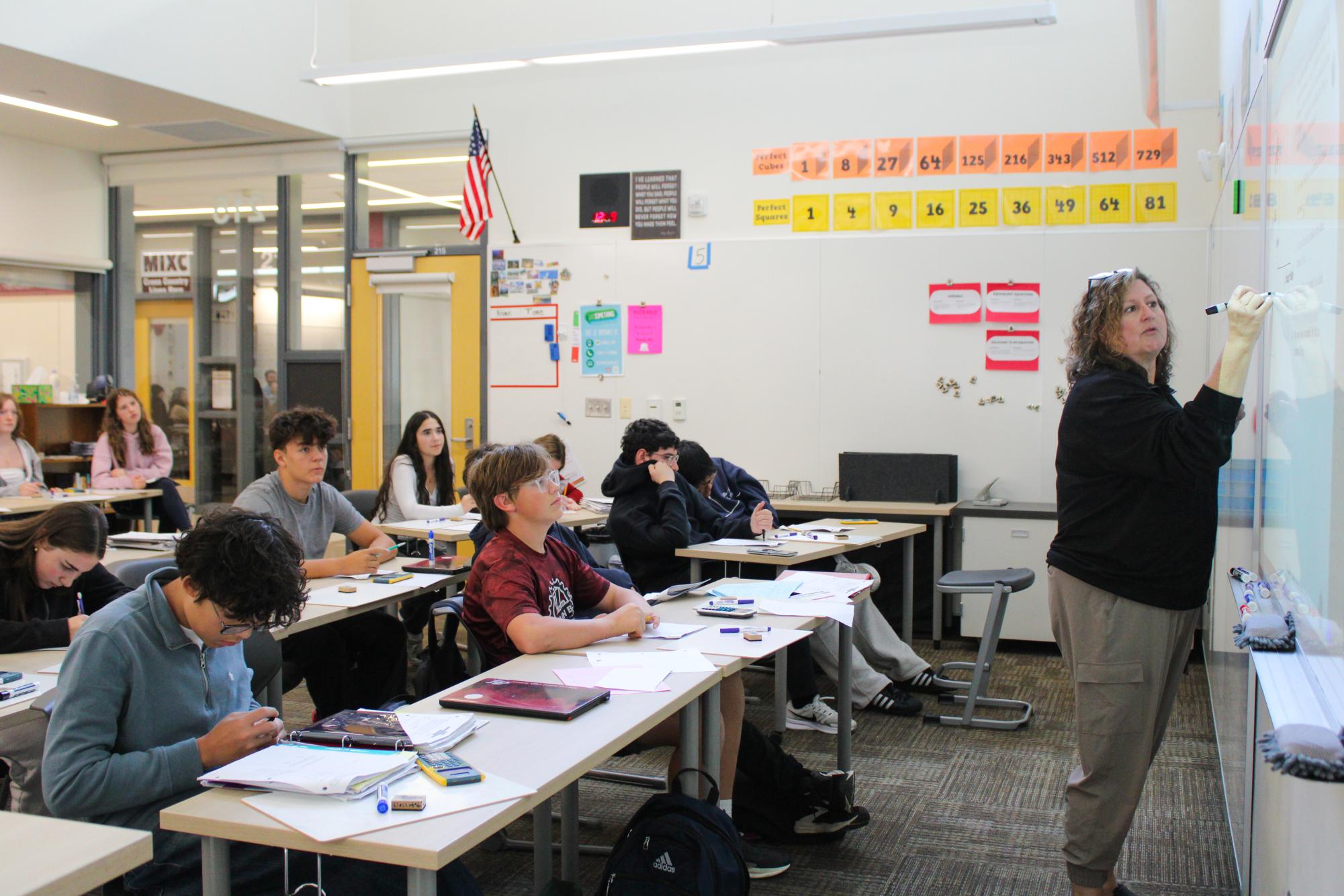
The long-standing end-of-semester ritual of MIHS teachers being met with desperate, crying students and agonizing whether to bump a grade a tenth of a percent might be coming to an end with a new policy that lets the computers make the call.
In an effort to eliminate inconsistency in grade-rounding policies among teachers and departments, MIHS has instituted automatic grade rounding in Qmlativ. Percentages will be rounded up to the nearest whole number. For example, if a grade for an assignment is 86.5%, it will automatically round up to 87%. Students will see only whole numbers.
“The outside agency [that conducted an analysis last year] learned that our grading practices are inconsistent across the building, and one area in particular was discovered, and it was rounding,” Principal Nick Wold said. “We needed to align our practices… [to] remove the ability to bump so students no longer need to lobby at the end of terms for staff to reconsider how they have been graded.”
In previous years, students might have persuaded anyone from the unbending 20-year-strong teacher to the teacher who was open to rounding 2.5% to bump their grade. Now, students might finally find peace somewhere between a 92.9 and a 93, while their teachers might take even greater relief. This policy is not about lowering the standards for each grade; it aims to standardize grading and alleviate rounding conflicts.
In the past, MIHS teachers have had diverse systems and policies in place to determine whether and to what extent they will round grades. Many chose not to round at all, instead opting for grade cushioning throughout the year.
“I tried to give assignments of increasing point values as the semester wore on, [with the] hope that students got more comfortable with the kinds of assignments, but certainly more developed in their skills and their understanding,” English teacher Creighton Laughary said. “They would perform better and better. That’s usually how learning works.”
Beyond weighting the scores toward the end of the semester, Laughary also offered “padding assignments,” intending that students earn full points to boost their grade by at least a percent. In alignment with his grading policies, which reward students for growth, he appreciates the new policy’s potential to shift the focus from grades to learning.
Math teacher and Department Head Kate Yoder reiterates Laughary’s hope that students will direct less energy toward getting a better grade from their teacher, and is happy if that means having the question of rounding taken off her plate.
“It’s really hard at the end of the semester, because I care about my students,” Yoder said. “I know students sometimes think, ‘oh no, [teachers] are just coldhearted,’ but it really isn’t.” When students come to her to round a grade that they are so close to, but she has already given grade-boosting opportunities, she has to prioritize consistency, even if it breaks her heart.
Teachers are not alone in this, with many students celebrating their automatically boosted GPAs. However, senior Kimi Nakata believes that students will still request grade rounding and should still be allowed to do so.
“I think it teaches you how to advocate for yourself in a way,” Nakata said. Additionally, while she understands that the transition in grading policies would have to occur at some point, she and many seniors are frustrated to only receive this benefit in their senior year. Students are also annoyed that the policy rounds grades automatically at all points in the year. “I get the idea of it, but the fact that you can’t see what your actual [unrounded] grade is throughout the year is negative,” Nakata said.
Laughary and Yoder agree that the policy has its costs, primarily in replacing autonomy with automation. “What I think unifies or standardizes our classes is that we’re all working toward the same learning targets, but at Mercer Island, we have some academic freedom to help students move toward those targets in slightly different ways,” Laughary said.
Yoder explains that “[teachers aren’t] cookie-cutter, turning out little robots that are exactly alike,” but instead are reflective and thoughtful with each decision. “It’s not let me throw a dart in a dart board and oh, I’ll pick that percentage for this,” she said.
However, Yoder feels the benefits outweigh the costs. “I would give up a lot of autonomy to have [students begging for grade rounding] go away, and to not have that heartbreak.”
With automatic grade rounding raising questions about the need for existing grade cushioning, teachers are still adjusting their grading policies to accommodate this change. Laughary wants to use this year as a transition year to the new policy, and many other teachers plan not to make changes yet. For now, both teachers and students feel that they are benefiting from this policy. It’s possible that the most significant change isn’t the grades being rounded, but the rounded-out friction between students and teachers.